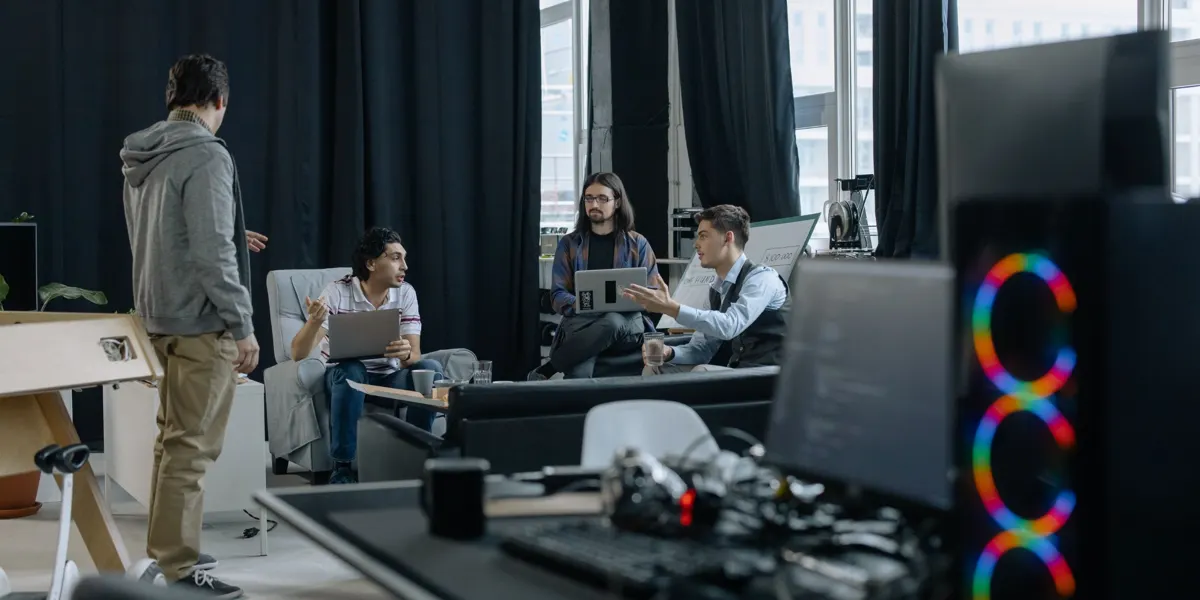
Game testing
How testing games differs from testing apps: gameplay, balance, progression, performance, platforms and certification.
Games are software, so everything from earlier chapters applies — but games add things ordinary apps don't have: physics, real-time performance, endless player creativity, and the question “is it fun?”. Game QA combines systematic testing with a lot of playing in deliberately unusual ways.
What game testers check
| Area | Examples |
|---|---|
| Functionality | Menus, saving and loading, settings, controls, achievements |
| Gameplay and logic | Quests complete correctly, triggers fire once, AI behaves sensibly |
| Balance | No weapon, strategy or country dominates; difficulty curve feels fair |
| Progression and economy | Experience, currencies and rewards can't be exploited or softlocked |
| Collisions and world | Falling through the map, getting stuck in walls, reaching unreachable areas |
| Performance | Frame rate, loading times, memory on minimum spec hardware |
| Compatibility | GPUs, controllers, resolutions, consoles, mobile devices |
| Localisation | Text fits UI, fonts support all languages, voice and subtitles match |
| Multiplayer | Lag, desync, reconnecting, cheating, matchmaking |
Typical game bugs
- Softlock: the player can't progress but the game hasn't crashed (a door that never opens)
- Sequence break: doing things in an unexpected order skips or breaks content
- Exploit: an action that gives unlimited resources or invincibility
- Save corruption: a save that can't be loaded after an update
- Clipping: characters or the camera pass through objects
- Desync: players in the same match see different states
Bug reports for games
Reproduction steps matter even more in games because so much depends on state. Include the build number, platform, save file, map coordinates or level, what the player had equipped, and a video. Note the reproduction rate: “3 out of 10 attempts” is valuable information.
Balance testing
In strategy and simulation games, balance is tested with both people and numbers. Testers play different strategies and record outcomes; automated simulations run thousands of matches to spot dominant choices. In our own game [Worldeath](https://worldeath.com/), for example, we check that very different countries can each reach their goals and that no single policy always wins.
Performance and platforms
Measure frame rate in the most demanding scenes, not in an empty level. Test on the minimum supported hardware, with long sessions to catch memory leaks, and after hours of play when saves become large. Console and store releases go through certification with strict technical requirements — for example, handling a disconnected controller or a full storage — so these checks belong in the regular test plan.
Playtesting
Playtests with people who have never seen the game answer questions bugs can't: where players get confused, what they find boring, what makes them quit. Watch silently, record, and ask questions afterwards.